SAP FICO S/4HANA Online Training with Real-Time Projects
Trusted by 20,000+ professionals across India, the US, and Middle East.
SAP FICO S/4HANA Online Training
At UnoGeeks, our SAP FICO S/4HANA Training is designed to make you project-ready and placement-focused from day one. With SAP S/4HANA Finance implementations rapidly expanding across global enterprises, the demand for skilled SAP FICO consultants specialising in General Ledger (GL), Accounts Payable (AP), Accounts Receivable (AR), Asset Accounting, and Cost Controlling (CO) continues to grow rapidly worldwide.
SAP FICO professionals today command strong salary packages, with freshers securing competitive entry-level roles and experienced consultants earning high-paying positions in top consulting firms and MNCs. Our training goes beyond theory with real-time financial process implementations, end-to-end accounting scenarios, interview preparation, and live project-based learning to make you fully job-ready.
By the end of the program, you won’t just understand SAP FICO S/4HANA — you’ll be ready to crack interviews and step into real SAP FICO implementation roles with confidence.
Our Students Work At








For Quick Questions
SAP FICO Training Videos
Get Course Full Syllabus
SAP FICO Training Course Details
About SAP S/4HANA FICO
SAP S/4HANA FICO is a powerful, next-generation financial management solution that integrates Financial Accounting (FI) and Controlling (CO) to manage all core finance operations on a single intelligent platform.
It enables organizations to automate accounting processes, gain real-time financial visibility, ensure compliance, accelerate financial closing cycles, and drive smarter business decisions using SAP’s advanced in-memory HANA technology.
Key Features & Capabilities
• Unified Finance Platform – Combines Financial Accounting (FI) & Controlling (CO) in one system
• End-to-End Finance Modules – General Ledger, Accounts Payable, Accounts Receivable, Asset Accounting, Bank & Cash Management
• Real-Time Financial Insights – Instant reporting powered by SAP S/4HANA analytics
• Advanced Accounting Framework – New GL, Parallel Accounting & Universal Journal (ACDOCA)
• Enterprise Structure Setup – Company code, business area & controlling area configuration
• Seamless Module Integration – FI-MM, FI-SD integration for complete business process flow
• Taxation & Compliance – GST, TDS and statutory configurations
• Cost & Profitability Analysis – Product Costing, CO-PA & Profit Centre Accounting
Become a Certified SAP FICO Consultant
Looking to build a high-paying career in SAP S/4HANA Finance?
Join UnoGeeks’ Best SAP FICO Online Training Program — trusted by thousands of professionals and recognized as one of the top SAP FICO training institutes in the market.
We focus on real-time SAP implementations, certification guidance, and job-oriented skills — not just theory.
What You Will Learn
• SAP FICO fundamentals (FI & CO) and enterprise structure configuration
• General Ledger (GL) setup and New GL concepts in S/4HANA
• Accounts Payable (AP), Accounts Receivable (AR), Bank & Cash Accounting
• GST, TDS, Asset Accounting and compliance processes
• FI-MM and FI-SD integration with real-time scenarios
• Controlling (CO), Cost Element Accounting & Internal Orders
• Product Costing, Material Ledger & Profitability Analysis (CO-PA)
• Profit Centre Accounting and real-time reporting
• Hands-on SAP S/4HANA FICO Live Project implementation
• SAP FICO certification guidance and exam preparation
• Resume building + mock interviews with personalized feedback
• Job readiness support with regular SAP FICO job openings and referrals
🔔 Daily SAP Job Alerts by UnoGeeks
Follow us on LinkedIn for real hiring updates:
👉 UnoGeeks SAP Jobs & Placement Updates
Who Can Enrol in This Course?
• IT professionals looking to transition into SAP FICO consulting
• Finance & accounting professionals aiming to move into SAP roles
• Graduates & post-graduates seeking high-growth IT careers
• Freshers looking for high-paying SAP career opportunities
Prerequisites
No prior SAP experience required.
We cover all foundational concepts as part of the training:
• Basics of SAP and ERP systems
• Core finance and accounting concepts
• Business process understanding for FI & CO modules
Register for a Free Demo
SAP FICO S/4HANA Training Course Curriculum
- Introduction to ERP
- Introduction to SAP & R/3 Architecture ASAP Methodology
- Introduction to HANA AND 54 HANA
- Modules in SAP and their coverage
- Overview of ABAP, BASIS, MM, PP AND SD
- What is Fl/CO
- Sub modules in Fl & CO
- Introduction to G/L (New G/L), A/P, A/R/ AA
- Introduction to CEA, CCA, EC-PCA, CO- PA and PC
- Concepts of Integration with MM and SD
- Defining company
- Configuring company code
- Defining business area
- Assigning company code to company
- Chat of Accounts -Types of COA
- Fiscal Year variant -Types of Fiscal Years
- Posting Period Variant
- Open and Close Posting Periods
- Multiple Currencies and Exchange Rate Maintenance
- Defining posting keys
- Defining tolerance groups for GL & Employees
- Other Aspects of Global Parameters
- Define Retained Earnings Account
- General Ledger Accounting
- General Ledger Postings
- Document display and account display
- Park Document, Hold Document and Account
- Assignment Model Sample document
- Month end Provisions-Accrual/Deferral Documents and Open Item Management
- Standard Payment, Partial and Residual items method
- Define void reason codes
- Reversal of documents-types of reversals
- Introduction to Multiple Ledgers for Local GAAP, IFRS
- Define and Activate New G/L
- Activation and Specification of Additional Ledgers
- Define Currency for Additional Ledgers
- Define Document types for Entry View
- Documents in G/L-Ledger & Ledger Grp, Foreign Currency, Special Periods.
- Foreign currency valuation
- G/L Automatic Clearing Maintenance
- Transfer Balances and Carry Forward (B/S & P/L Items)
- Foreign Currency Exchange rate types Creation
- Foreign Currency translation ratios creation
- Maintenance of Exchange rates in Forex table
- Foreign Currency postings
- Revaluation of Foreign currency Balances
- Financial Statement Version (FSV) creation-B/S & P/L
- G/L Reports
- Segment reporting
- Define Document Splitting for G/L accounting
- Activate Document Splitting
- Active and passive document splitting
- CO-Fl reconciliation
- Introduction to HANA and S4HANA
- Introduction to Simple Finance and Add-on
- Introduction to S/4 Hana (Finance) Introduction to Fiori
- Introduction to Net Weaver Business Client and Universal Journal
- Changes in Customization and General Ledger Accounting
- Accounts Payable and Bank Master Data Creation Changes
- Accounts Receivable and Asset Accounting Changes
- Changes in Controlling
- New Functionalities in General Ledger Accounting
- New Functionalities in Accounts Payable & Accounts Receivable
- New Functionalities in Asset Accounting & Controlling
- Tables in ECC6 and Simple Finance Release notes on Simple Finance
- Overview of Cash Management
- Overview of Integrated Business Planning
- S/4 HANA Finance Migration
- Understand Migration Prerequisites
- Migration Methodology from Classical & New GL
- Preparations and Migration of Customizing
- General Ledger, Journal Entry ledger & Controlling Settings
- Settings for Asset Accounting & House Banks Activities after Migration
- Configuring New Functionalities in S/4 Hana
- Universal Journal & Convergence of GL account & Cost Element
- New Data structures and Obsolete Data Structures
- Improvements in CO-PA & Period End Closing
- Overview of New Cash Management Solution
- Overview of Integrated Business Planning New Ledger Concept
- Central Finance/Central Journal
- New Asset Accounting
- Various restrictions and limitations
- Key reports delivered by Simple Finance
- New Fiori reports delivered by Simple Finance
- Key Changes in Logistics (MM, SD, AND PP)
- Changes in Simple Finance 1709
- Defining Vendor Account Groups
- Number range creation for Vendor account groups
- Number Range assignment for Account groups
- Define tolerances for vendors and customers
- Document Types for Vendor transactions
- Creation and Maintenance of Reconciliation Accounts for Vendor Data
- Update in GL
- Creation of Customer Master Data
- Special GL Transactions
- Automatic determination of G/ L Accounts for Taxes
- Foreign Exchange (Realized and un Realized Accounts)
- Terms of Payment
- House Banks
- Check Register, Check Maintenance, Issue, Void Etc.
- Payment methods- check and bank transfer methods
- Automatic Payment Program
- APP In depth Scenarios — Free selection, blocking, tolerance days,
- Minimum cash discount, max cash discount, individual payments,
- Partial payments, down payments, reallocation, reprinting of checks etc.
- Payment process using DME
- Payment process using IDOCS
- Defining Customer Account Groups
- Number range creation for Customer account groups
- Number Range assignment for Account groups
- Document Types for Customer transactions
- Creation and Maintenance of Recondition Accounts for Customer Data update in GL
- Creation of Customer Master Data
- Special GL Transactions
- Automatic determination of GL Accounts for taxes, foreign exchange
- Item interest calculation
- Dunning Procedure
- Down payments, bills of exchange and guarantees
- Bed debts and provision management
- BRS Basics
- Manual & electronic bank statement
- Cash Journals
- Basics of GST types of GST and applicability
- Creation of GST Tax calculation procedure
- Creation of condition types and account types
- Creation of Tax codes
- Assigning GL accounts for tax postings
- Input tax credit concept and VAT
- Withholding taxes (TDS) – Basics of TDS
- Purpose and overview of TDS
- TDS configurations
- Chart of Depreciation
- Define 0% tax Codes for asset accounting
- Asset Classes and Account determination
- Depreciation Areas – Companies Act, IT Act, IFRS and US GAAP
- Depreciation Areas for Parallel Currencies
- Group Assets
- Depreciation Keys
- Asset Master data (Main and Sub Assets)
- Overview of Revolution of Assets
- Introduction to Inflation Accounting
- Asset Acquisition (Direct and AuC)
- Depreciation posting Runs
- Asset retirement - Scrapping, with Revenue with Customer and without Customer)
- Inter and Intra Asset Transfers
- Asset Reports/ With Different variants and Asset explorer
- Strategy on data Migration related to Assets (Legacy Assets- upload process)
- Asset procurement with MM +GL+AA Integration
- Asset Sale Process with SD +GL+AA Integration
- Unplanned deprecation posting
- Revaluation of assets
- Asset catch and smoothing
- Aue settlement to Main assets
- Fl - MM Integration (Conf. from MM to attain PO, GR and IR)
- Account Assignment Categories in PO and business process used with different Account Assignment categories.
- Valuation Area, Valuation class and its importance in Material Master.
- Accounting aspects from Material Master
- Material Movement Types
- OBYC and G/L account assignments for MM integration
- Fl + MM Integration with GST
- Procurement of direct & indirect material
- Procurement of Assets & services
- In depth P2P Cycle Explanation and its Fl association.
- Price differences and their handling
- Fl+ SD Integration with GST
- Pricing condition types and their usage
- Importance and use of sales area, sales organization, distribution channel
- In depth 02C CYCLE Explanation and its Fl association
- Revenue Reorganization Process in Fl and SD Integration
- VKOA and GL account assignments for Fl- SD integration
- Sale of goods including Trading Goods & Finished Goods
- Service Sales
- Define Controlling Area
- Maintaining control area settings
- Importance of Different Fields in controlling Area
- Assignment of Controlling area to Company Codes
- Maintaining number ranges for controlling documents
- Maintain Versions
- Activate components in controlling areas
- Primary Cost and secondary Cost Elements
- Cost Element categories
- Cost Element groups
- Cost Element report Groups Cost Center Hierarchy
- Cost Center Group
- Cost Center Categories
- Cost Center Mater
- Activity Type
- Statistical Key Figures
- Reposting, Distribution and Assessment
- Activity type categories
- Planning and Budgeting of Cost Elements
- Define Planner Profile, Versions for Planner Profile
- Planning VS Budgeting of Cost centers
- Cost Center Report
- Order Management in Controlling Area
- Define and Assign number ranges to Order Groups
- Types of orders
- Model Orders
- AuC (Assets) process with Internal Order (Real)
- Investment Management Integration with Internal Orders
- Month end and final Settlements of Internal Orders Information System (Reports) for Internal Order
- Configuration of product costing
- Maintain overhead cost elements
- Maintain overhead keys
- Define cost component structure
- Maintain Overhead cost Elements
- Define Costing Sheets
- Define Overhead Keys and Groups
- Define Cost Component Structure
- Variance Calculation
- Work in Progress
- Settlement
- Variance Calculation
- Work In Progress
- Settlement
- Configuration of product costing
- Product Cost by Sales
- Result Analysis
- Settlement
- Product Costing by Planning
- Product Costing by Order
- Product Costing by Period
- Product Costing by Sales Order with MM, SD, PP and COPA Integration
- Define and Activate Material Ledger
- Assign Currency types to Material Ledger
- Dynamic Price Change in ML
- Other Aspects of ML
- Material Costing
- Define Operating Concern
- Define Characteristics and Value fields
- Define Profitability Segment Characteristics
- Define Characteristic Hierarchy and Derivation
- Maintenance and Assignment of Value fields
- Transfer of Billing Documents to COPA
- Automat ic Account Assignment
- Maintain PA Transfer structure for Direct Fl Postings
- Information System in COPA
- Maintain profit Center and Activation of Company Codes in profit center
- Control Parameters for Actual data
- Plan versions
- Profit Center Standard Hierarchy
- Profit Center Groups
- Transfer pricing Process with profit Center
- Maintain planner profiles
- Distribution & Assessment
- Automatic Account Assignment for Revenue Elements
- Reports in Profit Center Accounting
- Preparation of Functional specs for Z reports
- LSMW
- Report Painter
- Resolving tickets with Real time scenarios
- Implementation, Support, and maintenance process
- Complete Real Time Projects in ECC and S/4 HANA
- Inbound Delivery Documents
- Outbound Delivery Documents
- Warehouse Tasks
- Warehouse Orders
- Implement SAP FICO for a Live Project.
- Understand the requirement and come up with config workbooks.
- Configure SAP FICO as per config workbook.
- Implement SAP FICO Modules as per Config Workbooks
- Test the setups.
- Explain various SAP FICO Certification Options
- Discuss Important SAP Certification Exam Questions
- Prepare for SAP FICO Certification
- Prepare Crisp Resume as SAP FICO Specialist
- Discuss common interview questions in SAP FICO
- Provide Job Assistance
🎥 Watch How We Teach SAP FICO S4/HANA
🎓 Learn From Our Most-Watched real-time SAP S/4HANA Sessions
For Quick Questions
SAP FICO Training Videos
Get Course Full Syllabus
SAP FICO S/4HANA Lead Trainer – Industry Expert for SAP FICO Training at UnoGeeks

100+ Live Batches Delivered
2000+ Professionals Trained
20+ Years SAP FICO Experience
Mr. Shiva is the Lead SAP FICO S/4HANA Trainer at UnoGeeks and a seasoned industry expert with over 20+ years of experience delivering complex SAP FICO and S/4HANA Finance implementations for top US-based product companies and global consulting firms.
He specialises in end-to-end SAP FICO functional training, guiding professionals through real-world implementations of General Ledger (GL), Accounts Payable (AP), Accounts Receivable (AR), Asset Accounting, Bank & Cash Accounting, and Controlling (CO) including Cost Element Accounting, Internal Orders, Product Costing, Material Ledger, and Profitability Analysis (CO-PA).
Having led large-scale SAP financial transformation programs across multinational organizations, Mr. Shiva brings deep implementation expertise into every training session. His hands-on, project-driven approach ensures learners gain practical exposure to real-time financial processes, enterprise integrations (FI-MM, FI-SD), reporting structures, and compliance-driven accounting environments — enabling them to confidently step into SAP FICO consultant roles and excel in real client projects and interviews.
Earn Your SAP FICO S/4HANA Certification with Confidence
Showcase your expertise with an official certificate recognized by employers.
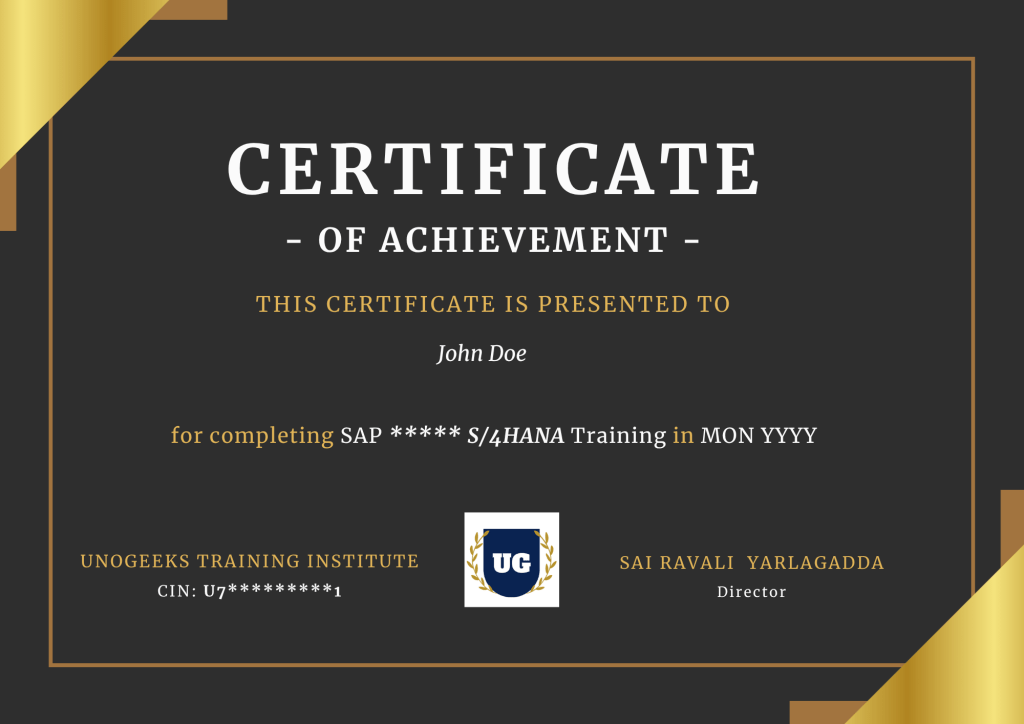
UnoGeeks Sample SAP Certificate
🎓 Official Certification
Earn an official course completion certificate validating your practical SAP FICO S/4HANA expertise
🔗 SAP FICO S/4 HANA Certification
You will easily clear SAP S/4HANA Finance Certified Application Associate exam
🌍 Industry Recognition
Strengthen your resume with widely recognized credential trusted by employers and consulting firms.
🚀 Career Advancement
Gain hands-on SAP FICO S/4HANA skills that help you stand out & advance in your career
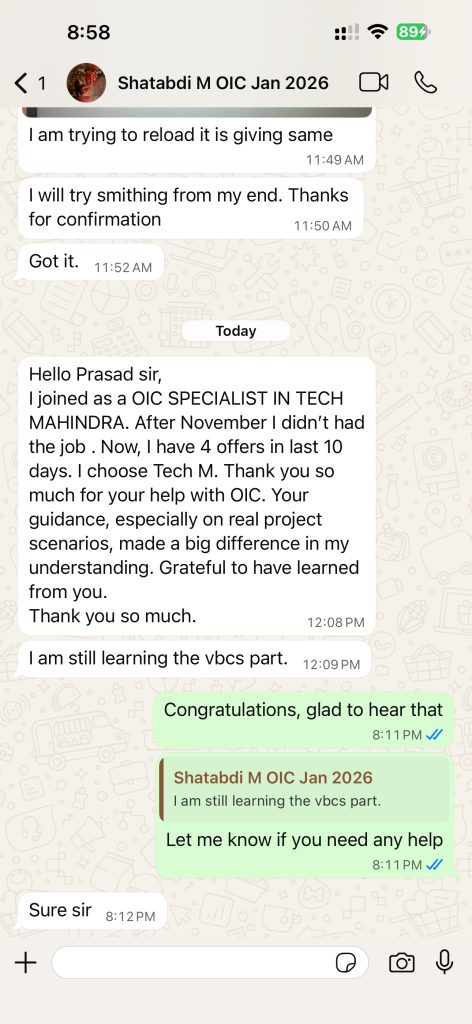
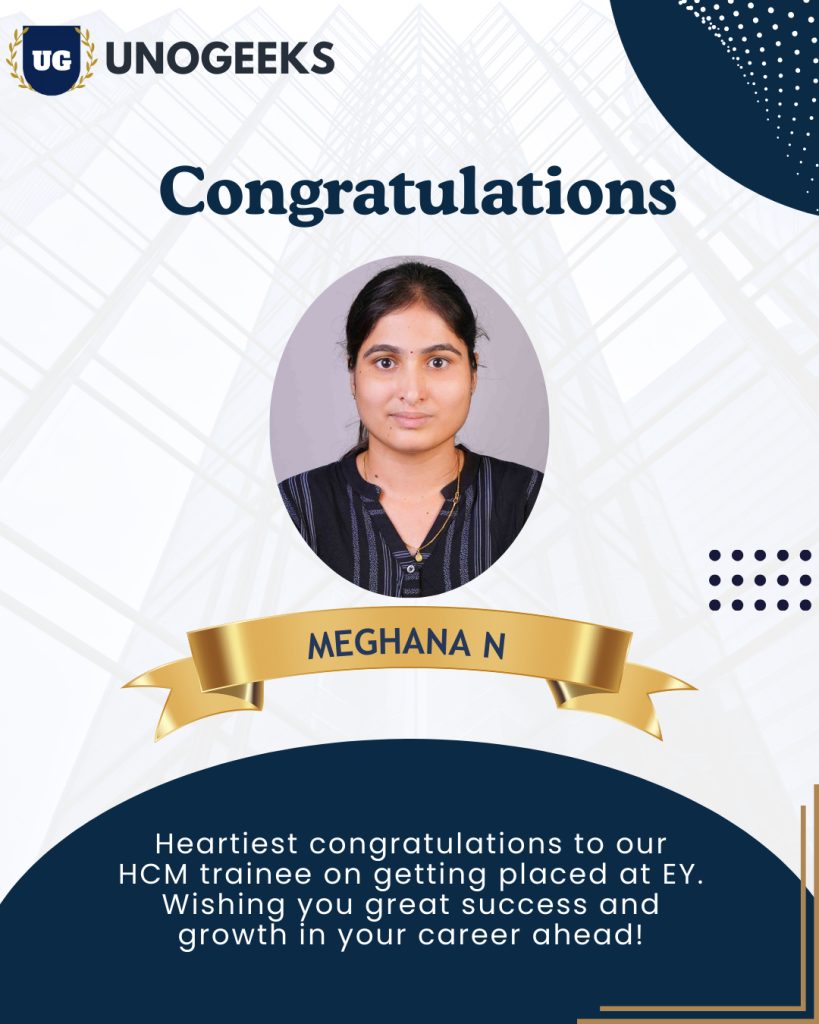
Few Success Stories from Our Students ✅
✅ “Recent real placements & live student messages (updated regularly)”



SAP FICO S/4HANA Consultant Jobs & Salary Trends
📈 High Market Demand
SAP FICO skills are in strong demand as enterprises worldwide modernise their financial systems and migrate to SAP S/4HANA Finance. Organizations across industries require skilled SAP FICO consultants to manage core finance processes like General Ledger, Accounts Payable, Accounts Receivable, Asset Accounting, taxation, and financial reporting — creating thousands of job opportunities across consulting firms, shared service centers, and global enterprises.
🏢 Used by Global Firms
Leading organizations across banking, manufacturing, healthcare, retail, IT services, and multinational enterprises rely on SAP S/4HANA Finance to run mission-critical financial operations. SAP FICO consultants play a key role in implementing end-to-end financial processes, integrating FI with MM and SD modules, ensuring compliance, automating workflows, and enabling real-time financial reporting — supporting large-scale digital transformation initiatives.
💰 Attractive Salaries
SAP FICO consultants earn highly competitive salaries worldwide, driven by strong demand for professionals with real-time implementation experience and functional expertise. Freshers can secure high-growth entry-level SAP roles, while experienced consultants consistently command premium compensation packages in top consulting firms, MNCs, and global finance transformation projects.
Our Training Advantage

Learn from Certified Experts
Get trained by Industry-Certified professionals with deep real-world Oracle Cloud implementation experience

Real-Time Implementation Projects
Learn through real project scenarios that mirror actual client implementations & production use cases.

Interactive Live Training Sessions
Highly interactive live sessions with recordings provided, so you never miss a discussion.

Resume, Interview & Job Assistance
Guidance on resume building, interview preparation, and job support tailored to Oracle Cloud roles

Live Demos Before Enrolment
Attend up to 3 live demo sessions to evaluate the trainer, content quality, and teaching approach

24×7 Learning Support
Prompt support for queries, doubts, and technical issues throughout your learning journey.
What Students Say on Google
⭐ Rated 4.8★ by 600+ Google Reviews
Trusted by hundreds of professionals across Oracle Cloud domains
Free Career Call – Talk to Our Training Experts
Get batch details, syllabus, demo schedule, and fee structure — no obligation
+91 73960 33555
Get Batch Dates, Fees & Demo Details
+91 73960 33555
Mon–Sat | 6 AM – 10 PM IST
info@unogeeks.com
For detailed queries
Live Chat
Chat with our support team now
Trusted by 5,000+ learners | 500+ real-time batches completed
Why Students Trust UnoGeeks
500+
Real-Time Batches Completed
5000+
Happy Students
5 *****
Star Ratings
20+
Expert Trainers
SAP FICO S/4HANA Training 2026 Batch Slots
WeekDay Batch 1

Monday – Friday

07:00 – 08:15 AM (IST)
WeekDay Batch 2
Monday – Friday
08:15 – 9:30 AM (IST)
WeekDay Batch 3
Monday – Friday
07:00 – 08:30 AM (IST)
SAP FICO S/4HANA Training 2026 FAQs
SAP FICO (Financial Accounting and Controlling) is one of the most in-demand SAP modules used by organizations to manage financial transactions, reporting, cost control, and internal accounting processes. It includes core components like General Ledger (GL), Accounts Payable (AP), Accounts Receivable (AR), Asset Accounting, and Cost Controlling.
SAP FICO plays a critical role in enterprise financial management by ensuring accurate financial reporting, regulatory compliance, and real-time visibility into business performance. With companies rapidly moving to SAP S/4HANA, the demand for SAP FICO consultants continues to grow globally.
SAP FICO training typically covers both Financial Accounting (FI) and Controlling (CO) modules, including:
-
General Ledger (GL)
-
Accounts Payable (AP)
-
Accounts Receivable (AR)
-
Asset Accounting
-
Bank Accounting
-
Cost Center Accounting
-
Profit Center Accounting
-
Internal Orders
-
Product Costing
-
Profitability Analysis (COPA)
A good SAP FICO course also includes real-time project scenarios, configuration steps, and interview preparation to make learners job-ready.
Yes, SAP FICO training is suitable for freshers, especially those with a background in commerce, finance, accounting, or MBA (Finance). Even candidates from non-finance backgrounds can learn SAP FICO with proper guidance.
Most training programs start with basic accounting concepts, making it easier for beginners to understand financial processes and SAP configurations step by step.
The ideal prerequisites for SAP FICO training include:
-
Basic understanding of accounting concepts (journal entries, balance sheet, P&L)
-
Knowledge of business processes
-
Interest in finance and ERP systems
However, many SAP FICO courses cover fundamentals from scratch, so prior experience is not mandatory.
SAP S/4HANA FICO is the next-generation version of SAP FICO built on the HANA in-memory database. It offers:
-
Faster financial processing
-
Real-time reporting
-
Simplified data models
-
Universal Journal (ACDOCA)
Compared to traditional SAP ECC FICO, S/4HANA provides improved performance, better user experience (Fiori), and advanced analytics capabilities.
SAP FICO training usually takes 6 to 10 weeks depending on the course structure. With consistent practice and project exposure, learners can become job-ready within 2–3 months.
Advanced concepts and real-time implementation scenarios may take additional time to master.
SAP FICO consultant salaries in India vary based on experience:
-
Freshers: ₹4 LPA – ₹7 LPA
-
2–5 years: ₹8 LPA – ₹15 LPA
-
Experienced consultants: ₹15 LPA – ₹30+ LPA
Professionals with SAP S/4HANA experience and real-time project exposure can command higher salary packages.
After completing SAP FICO training, you can apply for roles such as:
-
SAP FICO Consultant
-
SAP Financial Analyst
-
SAP Functional Consultant
-
SAP S/4HANA Finance Consultant
There are strong job opportunities in consulting firms, MNCs, and product companies across industries.
SAP FICO certification is not mandatory but highly recommended. It validates your knowledge and increases your chances of getting shortlisted in job interviews.
Many training institutes provide certification guidance and exam preparation as part of the course.
The key SAP FICO modules include:
-
Financial Accounting (FI)
-
Controlling (CO)
-
General Ledger
-
Accounts Payable & Receivable
-
Asset Accounting
-
Cost Center & Profit Center Accounting
-
COPA (Profitability Analysis)
These modules together help manage end-to-end financial operations.
SAP FICO is not difficult if you understand basic accounting concepts. With structured training, real-time examples, and hands-on practice, even beginners can learn SAP FICO effectively.
The key is to focus on business process understanding + system configuration.
SAP FI focuses on external financial reporting such as balance sheets and profit & loss statements, while SAP CO focuses on internal cost management and controlling processes like cost centers, profitability analysis, and budgeting.
Both modules work together to provide a complete financial solution.
Yes, many professionals from IT, support, or non-finance backgrounds successfully switch to SAP FICO. However, learning basic accounting concepts is important to understand real-time financial processes.
SAP FICO interview questions typically cover:
-
End-to-end business processes
-
Configuration scenarios
-
Real-time implementation experience
-
Integration with MM, SD modules
Good training programs include mock interviews and real scenario-based questions.
No, SAP FICO is a functional module and does not require coding. However, basic knowledge of reporting tools and data handling can be helpful.
Real-time project training involves working on actual business scenarios such as:
-
Company code creation
-
Financial postings
-
Vendor/customer setup
-
Asset accounting configuration
This helps learners gain practical experience similar to live client projects.
SAP FICO has excellent future scope due to:
-
SAP S/4HANA migration
-
Digital finance transformation
-
Cloud ERP adoption
Companies worldwide are upgrading their financial systems, creating continuous demand for SAP FICO professionals.
Yes, freshers can get jobs after SAP FICO training if they have:
-
Strong understanding of concepts
-
Hands-on project experience
-
Good resume and interview preparation
Entry-level roles are available in support, implementation, and consulting.
SAP FICO is used to manage:
-
Financial transactions
-
Accounting processes
-
Cost control
-
Financial reporting
-
Compliance
It acts as the backbone of financial systems in enterprises.
SAP FICO is one of the most stable and in-demand modules because every company requires finance and accounting. Compared to other modules, it offers:
-
Strong job stability
-
High salary potential
-
Long-term career growth